Egan, Berger & Weiner, LLC - Financial Planners, Investment Advisors, Portfolio Managers located in Vienna, VA

July 2012: Welcome to the first issue of the new monthly newsletter from Egan, Berger & Weiner, LLC

Hello, and thank you for your time in reviewing the first issue of our new monthly newsletter.

In each issue, we will share educational information that we hope will help you learn more about your retirement options.

This month we tackle a topic that is important to many of our clients: Saving for your retirement when you are a small business owner.

We know that anyone who runs their own business is a master juggler. As a result, it’s easy to get so overwhelmed with growing an organization that personal financial-planning issues are neglected.

Why would you want to move the goal of saving for retirement up higher on your priority list? Scroll down for details, and for information about a few options you might consider to help you plan ahead.

From all of us at Egan, Berger & Weiner, we thank you for your business and look forward to talking with you soon.

Michael Egan, Sheldon Weiner, and Bryan Beatty, partners


Featured Article

Don't Let Working for Yourself—and Saving for Retirement—Be a Non Sequitur

By Bryan Beatty, CFP®
Certified Financial Planner™
Partner, Egan, Berger & Weiner

When you run your own business, you are a master juggler—someone who as Michael Gerber says, “not only works on the business, but in the business.”

Too often, however, business owners get so overwhelmed with growing their company that they neglect personal financial-planning issues.

Why would you want to move the goal of saving for retirement up higher on your priority list?

  • Proper retirement planning can enhance the business because it helps you manage risk.
  • It also will make you more confident in the daily risks that are essential to your growth.
  • A strong financial plan has the potential to make your business more attractive to quality employees.
  • Since small business owners and their employees are more responsible today than ever before to save for their own retirement plans, saving plans provide a win-win situation for everyone.

The key is selecting the proper plan for you and your company.

Following are a few options to consider:

  • A Traditional IRA is a potentially tax deductible investment account allowing annual contributions up to $5,000 ($6,000 if over 50) that can be invested in stocks, bonds, or mutual funds as well as many other investments tax-deferred. Withdrawals beginning at age 59 ½ are available without early distribution penalties. The money is subject to required minimum distributions (RMD) beginning at age 70 ½. Deductibility depends on family income levels and spousal qualified-plan eligibility if they also work. Click here for more information in IRS Form 590.
  • A Roth IRA is similar to a Traditional IRA but the contributions are always after-tax dollars. The growth in the Roth IRA is tax-deferred. Distributions are tax-free if certain conditions are met. For tax-free distributions of growth, both of the following conditions must be met: 1) had a Roth IRA for five years, and 2) one of the following (a) age 59 ½, (b) death © disability (d) first-time home purchase ($10,000 lifetime maximum). A Roth IRA is not subject to required minimum distributions during the owner’s lifetime. Beneficiaries are subject to RMDs. Contributions are limited depending on family income levels. Click here for more information in IRS Form 590.
  • A SEP IRA is a Simplified Employee Pension IRA. It allows for a potentially larger contribution capability. Contributions of up to $50,000 are possible in 2012 and indexed for inflation depending on adjusted gross income and business schedule filings. (Reference IRS.gov pub 560.) Contributions made by the business owner have contribution requirements for eligible employees that may or may not make this plan a viable option. Click here for more information in IRS Form 560.
  • A SIMPLE IRA is a salary incentive matching plan IRA. SIMPLE IRA plans can provide a significant source of income at retirement by allowing employers and employees to set aside money in retirement accounts. SIMPLE IRA plans do not have the start-up and operating costs of a conventional retirement plan like a 401k. The amount the employee contributes to a SIMPLE IRA cannot exceed $11,500 in 2012. Click here for more information in IRS Form 560.
  • A 401k Plan is a plan that offers a little more flexibility than a SEP regarding contributions for employees. It allows for up to $50,000 (which includes an additional $5,500 if you are over 50), but is less restrictive when providing contributions in matching formula to employees. This design allows and encourages employees to get involved saving their own money, too. Click here for more information in IRS Form 560.

These are not the only options for retirement saving, but they are the most common. The correct plan for you may be one of these, or something more specialized.

And remember, certain limitations, restrictions, and liabilities come with creating and maintaining a retirement and savings plan for your company, so be sure to consult your tax and investments adviser.

Coming next month: It has been highly publicized that Social Security funds will likely not be enough for most people to retire on. In fact, for the Millennial generation (those born roughly from 1982–2003), there is a real likelihood that coming changes will put more responsibility on the individual for retirement savings and planning. To help clear up the confusion, my business partner Michael Egan will discuss “The Past, Present, and Future of Social Security” in our August Retirement column. Stay tuned for that.


About Bryan D. Beatty

Bryan Beatty is a Certified Financial Planner TM and partner at Egan, Berger & Weiner LLC, which is based in Northern Virginia. With more than 20 years of experience in the financial industry, he is a principal of this independent financial services firm, which is experienced in all aspects of investment and retirement planning.

An active member of the Financial Planning Association’s Career Development and College Outreach Committees, Beatty is a graduate of the University of Maryland with a BS in Finance. He is a former president of the Finance, Banking and Investment Society, and he is an avid musician who plays guitar and writes music in his spare time, and occasionally plays area venues. Originally from Baltimore, Beatty has lived in Northern Virginia since 1992.

For more information about Beatty’s services, send him an email at bbeatty@ebwllc.com.

For additional information about Egan, Berger & Weiner, LLC, visit www.ebwllc.com.

Securities and investment advisory services offered through ING Financial Partners, member SIPC. Egan, Berger & Weiner LLC is not a subsidiary of nor controlled by ING Financial Partners.

Book Review

"The Joy of Retirement," by David Borchard
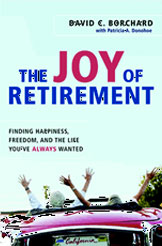
Review by Bryan Beatty, partner
Egan, Berger & Weiner, LLC

They say 50 is the new 40, and odds are good that if you are now in this second half of of life, you feel as vital, energetic, and passionate as ever. As a result, Baby Boomers reaching their 50s and 60s are redefining what it means to retire.

That’s why I thoroughly enjoyed psychologist David Borchard’s book, “The Joy of Retirement.”

For the last three decades, he has helped adults rejuvenate their careers and lives, and find fulfillment and meaning in this next stage. And although the financial side of retirement and aging is different from the physiological side, it is clearly equally as important.

In Chapter 1, in fact, Borchard busts the myth of what retirement means. Now 73, he knows from experience that you don’t need to withdraw into Webster’s definition of passive retirement: “to withdraw oneself from business, active service, or public life; to disappear, to take out of circulation.”

On the contrary, says Borchard: “I don’t want or intend to work full-time for any one organization ever again. But I do want more balance and diversity in my life than was possible when I was fully employed. That sentiment is one I often hear echoed from the hundreds of retirement-bound clients I have worked with over the years.”

He asks: “How about you? Where do you stand on the question of how you want to be spending your time in the next chapter of your life?”

Answers to those questions are discussed throughout the book, starting with Chapter 2, where the author insists that retirement can—and should—be a period of growth, rejuvenation, and discovery.

“Think of your life as a series of chapters in a book, with past chapters representing your personal history and future chapters as the blank pages upon which your story will be recorded,” he suggests. “You are more likely to achieve passion in your book of life if you exercise creative authorship over your future chapters rather than being a passive observer.”

In other chapters, he offers advice on:

  • Finding new interests that make the most of your unique talents.
  • Planning your 50-plus lifestyle.
  • Assessing what transitions you are ready and willing to make.
  • Defining priorities and goals.
  • Establishing your criteria for success.
  • Following the seven steps to maintaining vitality.
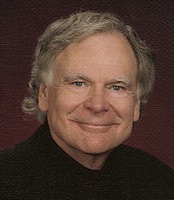
Borchard (pictured above) also provides seven steps to maintaining vitality.

He suggests that retirees remember:

  • Your life is a book of chapters.
  • You are an interesting subject.
  • You are more than old titles.
  • Values of the past may be outdated guides for the future.
  • It’s never too late to develop a latent talent.
  • Old dogs can learn new tricks.
  • Locate where your new life can flourish.

Enjoying the Second Season

I particularly appreciate the fact that Borchard never loses sight of our individual need to find fulfillment and self-actualization.

He repeatedly encourages readers to understand that their life doesn’t end when their career does—and that in many cases, the best is yet to come.

“Remember that you are the magnificent sum of everyone you have ever known, all that you’ve ever done, and every dream you’ve ever dared to envision,” Borchard reminds us.

“You wouldn’t have come this far if you hadn’t already been successful in many areas of your life. Now, you have the opportunity to use every last piece of it, to enjoy being the new you.”

For additional information on Borchard’s ideas, click here to learn more about The Joy of Retirement.