2. Best Practices for Teaching and Learning
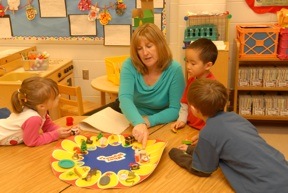
Best Practices in Fairfax County Public Schools are a synthesis of the most effective, research-based instructional practices used within our school system.
They are applicable at all grade levels and across all content areas. All teachers will be expected to incorporate these research-based practices into their daily instruction, professional conversations, and collaborations.
In addition, all instructional staff will ultimately be expected to build a shared understanding of the common definitions and to develop expertise in these areas.
The identification, training, and consistent use of a set of research-based best practices supports student learning and the high achievement expected from all students.
As we continue our work on closing the minority student achievement gap in FCPS, the research framework by Dr. Ronald Ferguson points to the need for a focus on content, pedagogy, and relationships.
Best Practices for Teaching and Learning addresses these ideas by identifying 26 strategies that focus teachers on student-engagement techniques, building student relationships, and checking for understanding.
Costs: Total cost for this project is $292,500 of PMOC funds.
About the Best Practices for Teaching and Learning project
This project was introduced at Leadership Conference in August 2009. Brochures were distributed to all teachers defining the 26 instructional strategies and pointing teachers to the Best Practices website on FCPS 24/7. The website has been populated with videos, PowerPoints, and other tools to help teachers learn more about implementing these strategies.
Professional learning in the form of seminars, conferences, Academy Courses, newsletters, and book talks have been designed to help facilitate implementation.
To provide ways for individual schools to understand where they are in their teaching practice as a professional learning community, Collaborative Learning Visits, or CLVs, were folded into this broader project. During a CLV, teachers visit each others’ classrooms and look for appropriate practice and the integration of Best Practices for Teaching and Learning.
CLVs provide a continuous and collaborative improvement model as a tool to identify areas of success or improvement within the classrooms. The roll-out of CLVs to all schools will be a staged implementation that designates pilot schools within each cluster. These designated schools will become model schools that can demonstrate the process for training purposes within their respective clusters.
Next steps:
1. The PLA teacher survey, distributed in December 2010, includes questions regarding the use of best practices, which will provide a baseline of teacher knowledge of best practices.
2. Design professional learning materials to align with school survey data that support identified needs pertaining to relationships, engagement, and checking for understanding.
3. Identify and train staff in the Collaborative Learning Visits methods to support a design of model schools in each cluster. CLV model schools will be chosen in each cluster; then follow through with a plan for intra-cluster training at model schools. Approximately 30 schools in FCPS have already been trained in the use of CLVs and have been using CLVs as tools to identify areas of success or improvement within their classrooms. The goal is to complete training of 90 schools by June 2011.
4. Provide an increasing number of resources for teachers, including instructional resources, videos, and training opportunities to increase awareness of best practices.
5. Create an online course on engagement.