Dealing with Contact Dermatitis
By Dr. John Jones
Simplicity Urgent Care
The path to my children’s elementary school leads me and my four little ones through a wooded park with a small bridge that takes us over a little brook. While it looks idyllic, I happened to glance off the path this month and spotted what appeared to be a field of poison ivy.
After much reminding that “leaves of three, let it be,” the kids have kept on the path. However, this experience encouraged me to share with you how to identify, avoid, and deal with a case of poison ivy.
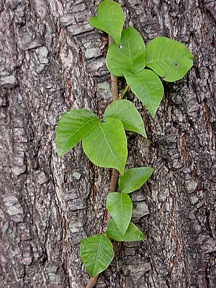
What it looks like: Toxicodendron radicans (poison ivy) grows along stream banks, roadways, fields, and forests. The compound leaf consists of three pointed leaflets, usually two to four inches long, and the middle one often has a longer stalk. The edges — smooth, toothed, or lobed — are glossy and reddish when they emerge in the spring, then become yellow toward the fall. Also, yellowish-green flowers appear in June or July, followed by light-colored berries.
What you need to know: Poison ivy and poison oak are in the cashew family and are actually not made of ivy or oak. While direct contact with the plant itself is the most common method of exposure, you can also get the rash from indirect contact — such as by touching clothing, shoes, or pets that have been in contact with the plant’s resin, called urushiol, which is widely distributed throughout the leaves, stems, and roots. For those who are very sensitive, simply being downwind of burning poison ivy can cause a reaction, including inflammation of the lungs.
For what do to if you are exposed, check our tips (right).
Source: Fairfax County Goverment